
Diagnostic Excellence Award Kolkata 2026
Introduction
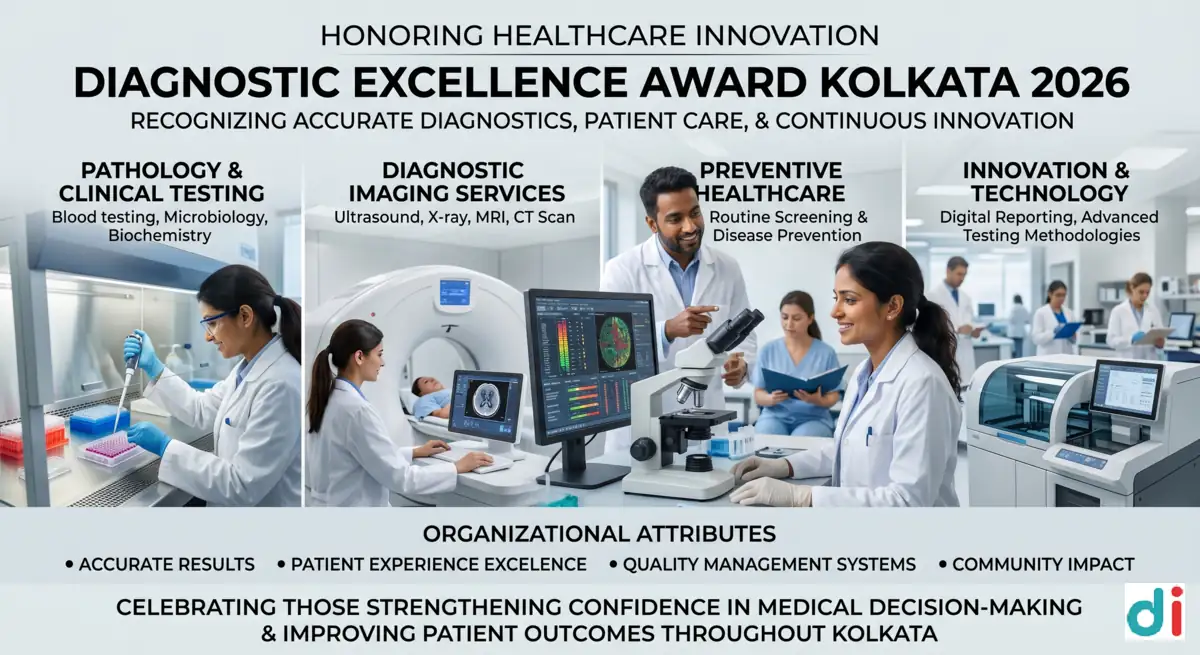
The Diagnostic Excellence Award Kolkata 2026 recognizes organizations that contribute to the advancement of healthcare through accurate diagnostics, patient-centered services, clinical quality, and continuous innovation. Diagnostic services form the foundation of modern healthcare by helping physicians make informed decisions, detect diseases early, monitor treatment effectiveness, and improve patient outcomes.
Healthcare today depends heavily on reliable diagnostic information. From routine blood investigations and preventive health screening to advanced imaging and specialized laboratory diagnostics, diagnostic centres play a critical role in supporting medical professionals and patients alike. The Diagnostic Excellence Award Kolkata highlights organizations that demonstrate commitment to quality, service reliability, diagnostic accuracy, healthcare accessibility, and patient care.
As healthcare needs continue to evolve, diagnostic centres are increasingly adopting advanced technologies, digital reporting systems, modern laboratory infrastructure, and evidence-based practices. These developments contribute significantly to healthcare quality recognition and improve the overall patient experience.
The purpose of this recognition is not merely to acknowledge operational excellence but also to encourage continuous improvement within the healthcare ecosystem. Organizations recognized through the Diagnostic Excellence Award Kolkata represent dedication to professional standards, innovation, healthcare service recognition, and responsible patient care.
This initiative brings attention to the importance of laboratory diagnostics, pathology services, diagnostic imaging, preventive healthcare screening, and clinical testing services that support healthier communities throughout Kolkata.
Understanding the Importance of Diagnostic Centres in Healthcare
Diagnostic centres serve as one of the most important pillars of healthcare delivery. Accurate diagnostic information enables healthcare professionals to identify illnesses, assess risks, evaluate disease progression, and develop appropriate treatment plans.
Every stage of patient care relies on diagnostic support. Whether a patient undergoes routine blood testing, specialized pathology analysis, imaging investigations, or preventive health screening, diagnostic centres provide critical information that influences clinical decisions.
Modern healthcare increasingly focuses on early detection and prevention. Diagnostic centres help identify potential health concerns before symptoms become severe. Preventive healthcare screening programs allow individuals to understand health risks and seek medical intervention at an early stage.
Laboratory diagnostics support physicians by providing scientific data related to infections, metabolic conditions, hormonal imbalances, chronic diseases, and numerous other health conditions. Similarly, diagnostic imaging services such as ultrasound, CT scans, MRI scans, and radiology investigations provide detailed insights into internal structures and medical conditions.
Healthcare systems depend on timely reporting, quality assurance protocols, and skilled healthcare professionals working within diagnostic environments. Clinical diagnostics excellence requires collaboration among laboratory experts, technicians, pathologists, radiologists, healthcare administrators, and support teams.
The Diagnostic Excellence Award Kolkata recognizes the value diagnostic centres bring to communities by helping improve healthcare outcomes, support disease prevention, and strengthen confidence in medical decision-making.
Recognition Framework for Diagnostic Excellence
Organizations considered for healthcare excellence recognition are evaluated through a structured framework that emphasizes quality, reliability, service standards, and patient outcomes.
Diagnostic Accuracy
Accurate results remain the foundation of clinical diagnostics excellence. Reliable testing procedures, quality control mechanisms, standardized protocols, and skilled professionals contribute to consistent diagnostic performance.
Patient Care Excellence in Diagnostics
Patient experience plays a significant role in healthcare service recognition. Factors such as accessibility, communication, convenience, comfort, transparency, and responsiveness influence the overall quality of service.
Pathology and Imaging Excellence
Diagnostic centres demonstrating strong capabilities in pathology laboratories and diagnostic imaging services contribute significantly to healthcare quality. Modern equipment, skilled interpretation, and quality reporting processes are important evaluation considerations.
Healthcare Innovation Recognition
Innovation supports continuous improvement within healthcare. Adoption of digital reporting systems, automation technologies, advanced testing methodologies, and patient engagement tools reflects commitment to service enhancement.
Quality Management Systems
Healthcare quality recognition requires effective quality assurance procedures, staff training programs, process optimization, and compliance with healthcare standards.
Accessibility and Community Impact
Diagnostic centres that expand healthcare access, support preventive healthcare screening initiatives, and contribute positively to community health demonstrate broader healthcare value.
The Diagnostic Excellence Award Kolkata acknowledges organizations that maintain a balanced focus on technical quality, patient satisfaction, innovation, and healthcare responsibility.
Healthcare Services Considered
The Diagnostic Excellence Award Kolkata recognizes organizations involved in a wide range of healthcare diagnostic services.
Pathology Laboratory Services
Pathology laboratories play a crucial role in healthcare. Blood testing services, urine analysis, microbiology investigations, biochemistry testing, hematology assessments, and specialized laboratory diagnostics provide valuable clinical information.
Diagnostic Imaging Services
Diagnostic imaging helps physicians visualize internal organs, tissues, bones, and body systems. Imaging technologies contribute to accurate diagnosis and treatment planning.
Common diagnostic imaging services include:
-
Ultrasound
-
X-ray
-
MRI
-
CT Scan
-
Doppler Studies
-
Mammography
Clinical Testing Services
Clinical testing services assist healthcare professionals in monitoring health conditions and evaluating treatment effectiveness. Specialized testing contributes to precision healthcare and evidence-based medical decisions.
Preventive Healthcare Screening
Preventive healthcare screening supports early detection of health risks. Regular screening programs can identify conditions before they progress, helping individuals maintain better long-term health.
Occupational and Industrial Health Services
Industrial healthcare programs support workplace safety, employee wellness, and health monitoring initiatives. Occupational health services contribute to workforce productivity and healthcare management.
The award recognizes organizations that demonstrate excellence across these service categories while maintaining high standards of patient care and diagnostic quality.
Recognized Healthcare Organizations
Healthy Wealthy Kolkata
Healthy Wealthy Kolkata contributes to healthcare awareness, wellness support, and diagnostic-related healthcare services. Through a focus on preventive health and patient-centered approaches, the organization supports individuals seeking reliable healthcare guidance and wellness solutions.
Its commitment to health education, community awareness, and accessible healthcare services reflects important aspects of healthcare service recognition.
The Healing Vibes Kolkata
The Healing Vibes Kolkata emphasizes wellness, holistic healthcare perspectives, and patient-focused service delivery. The organization contributes to improving healthcare experiences while encouraging individuals to take proactive steps toward better health.
Its approach aligns with principles of healthcare quality recognition and patient care excellence in diagnostics.
Liposé Fat Freeze Clinic Pune
Liposé Fat Freeze Clinic Pune represents innovation within specialized healthcare services. The organization demonstrates a commitment to advanced healthcare technologies and patient-focused treatment experiences.
Innovation, service quality, and client engagement contribute to its recognition within the broader healthcare ecosystem.
BMSF Industrial Health and Safety Clinic Pune
BMSF Industrial Health and Safety Clinic Pune plays an important role in occupational health, industrial healthcare services, and workforce wellness programs.
Its focus on workplace health assessments, preventive healthcare measures, and employee safety initiatives contributes significantly to healthcare service recognition and community well-being.
Innovation in Modern Diagnostics
Healthcare continues to evolve through technology and innovation. Diagnostic innovation recognition highlights organizations that embrace advancements designed to improve healthcare quality and patient outcomes.
Automation technologies have transformed laboratory operations by improving testing efficiency, reducing manual errors, and enhancing reporting speed. Digital healthcare platforms enable patients to access reports more conveniently and improve communication between healthcare providers and patients.
Artificial intelligence and data analytics increasingly support diagnostic interpretation, helping healthcare professionals identify patterns and improve decision-making processes.
Modern laboratory diagnostics also benefit from advanced testing methodologies that increase precision and reliability. High-throughput systems, digital pathology solutions, and integrated healthcare information systems contribute to improved service quality.
The Diagnostic Excellence Award Kolkata recognizes organizations that demonstrate commitment to innovation while maintaining patient safety, ethical practices, and healthcare quality standards.
Patient Benefits of Quality Diagnostic Services
High-quality diagnostic services provide numerous benefits for patients and healthcare providers.
Accurate diagnostics support timely medical intervention, reducing delays in treatment and improving healthcare outcomes. Early disease detection allows patients to address health concerns before complications develop.
Preventive healthcare screening programs help individuals understand potential health risks and adopt healthier lifestyle practices. Routine monitoring also assists in managing chronic conditions effectively.
Patient-centered diagnostic centres improve accessibility, convenience, and communication. Clear reporting processes and professional support contribute to better healthcare experiences.
Healthcare quality recognition ultimately reflects a commitment to delivering dependable services that support patient well-being, healthcare confidence, and long-term community health.
Frequently Asked Questions
What services do diagnostic centres provide?
Diagnostic centres provide pathology testing, laboratory diagnostics, blood testing services, imaging investigations, health screening services, and clinical testing services that support healthcare decision-making.
Why are diagnostic centres important in healthcare?
Diagnostic centres provide the medical information required for disease detection, treatment planning, health monitoring, and preventive healthcare management.
How do diagnostic tests help doctors make decisions?
Diagnostic tests provide measurable clinical information that assists physicians in identifying medical conditions and selecting appropriate treatments.
What is the role of pathology laboratories in healthcare?
Pathology laboratories analyze biological samples and generate data that helps healthcare professionals diagnose and monitor diseases.
What is diagnostic imaging and how does it work?
Diagnostic imaging uses technologies such as ultrasound, MRI, CT scans, and X-rays to visualize internal structures and assist medical diagnosis.
Why is preventive healthcare screening important?
Preventive healthcare screening supports early detection of potential health risks and encourages proactive healthcare management.
What factors contribute to clinical diagnostics excellence?
Diagnostic accuracy, quality assurance, professional expertise, patient care standards, and technological innovation contribute to clinical diagnostics excellence.
How are organizations evaluated for healthcare quality recognition?
Evaluation may include service quality, patient experience, diagnostic reliability, innovation, operational standards, and community impact.
What is healthcare innovation recognition?
Healthcare innovation recognition acknowledges organizations that adopt technologies and practices that improve healthcare delivery and patient outcomes.
Why is diagnostic accuracy important?
Accurate diagnostic information helps ensure proper treatment decisions and reduces the risk of medical errors.
Recognition Methodology
The Diagnostic Excellence Award Kolkata follows a structured recognition framework focused on healthcare quality, service excellence, innovation, and patient care.
Evaluation may consider publicly available information, organizational achievements, healthcare service contributions, patient-focused initiatives, diagnostic capabilities, and evidence of operational excellence.
Recognition aims to encourage continuous improvement across the healthcare sector while highlighting organizations that contribute positively to healthcare accessibility, quality, and innovation.
The award process emphasizes transparency, professional standards, and healthcare service recognition principles designed to support responsible industry development.
Apply for Recognition
Organizations involved in laboratory diagnostics, pathology services, health screening programs, diagnostic imaging services, clinical testing services, occupational health, and healthcare innovation are encouraged to participate in the Diagnostic Excellence Award Kolkata 2026.
The recognition program celebrates healthcare quality, service excellence, patient care, and innovation while promoting higher standards across the healthcare ecosystem. Eligible organizations can submit information regarding their services, achievements, quality initiatives, and community contributions for consideration.